KOSTEL NANEBEVZETÍ PANNY MARIE

A church that got a second chance. An amazing place that is truly one of a kind. That's how people usually describe the Church of the Assumption of the Virgin Mary in Neratov. This is no exaggeration, and anyone who has visited this place can confirm the truth of these words.
The church is always open to everyone and never closes. Because, as Pastor Josef Suchár says: "What's the point of churches that are closed.“
The Neratov Association, together with the Roman Catholic parish of Neratov, is participating in the restoration of the church. Support our efforts so that we can continue to develop this place.
Tower opening hours
Monday to Saturday: 9:00–20:00
Sunday: 11:00–20:00
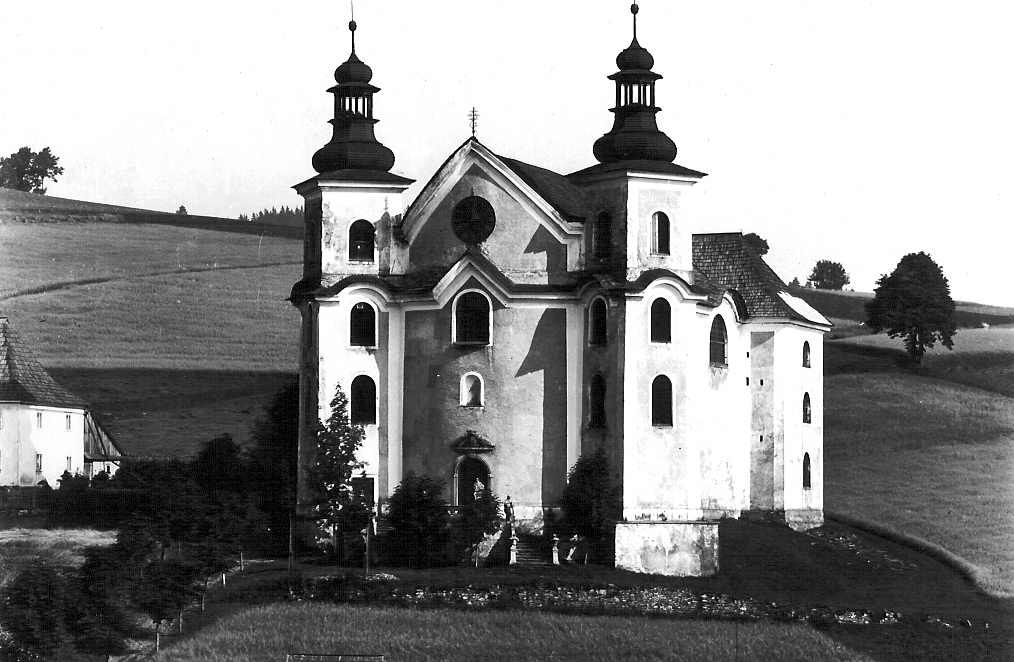
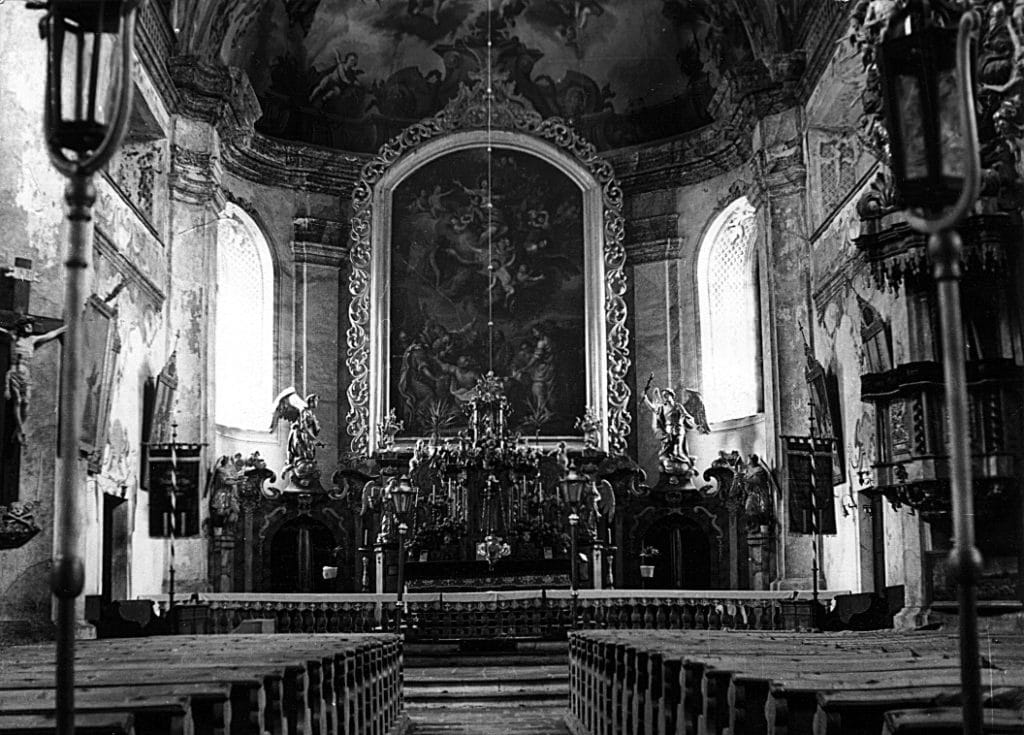
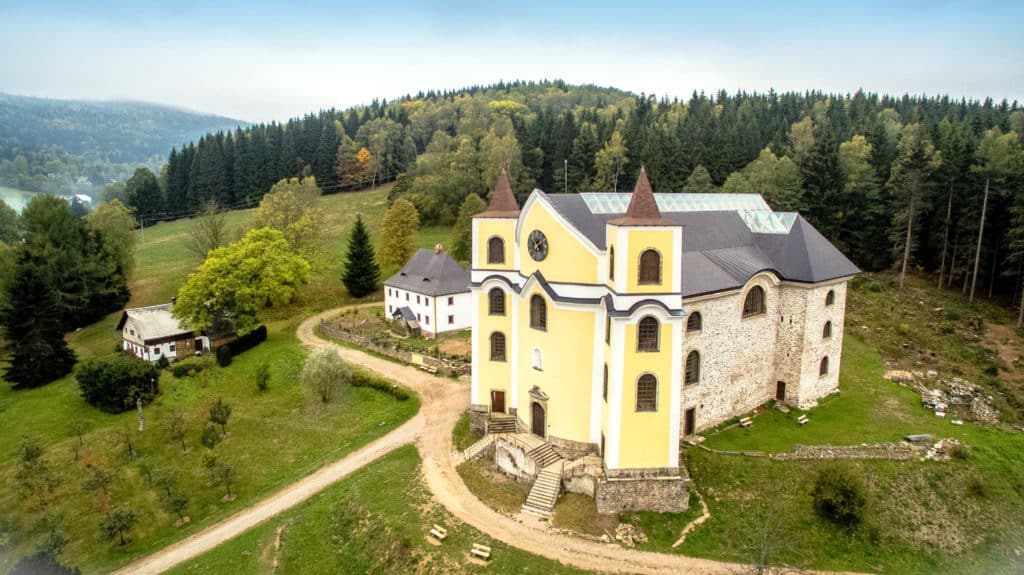
Since the second half of the 17th century, Neratov has been an important pilgrimage site. At that time, this was thanks to a statue of the Virgin Mary and a spring that flows near the church. The original church was no longer able to accommodate the increasing number of pilgrims, so a new Baroque church was built on the hill between 1723 and 1733. The foundation stone was laid by the owner of the estate, Johann Karl of Nostitz-Rhieneck, on August 14, 1723. The consecration took place on St. Bartholomew's Day, August 24, 1733.
The architect of the building is unknown. Experts most often attribute it to the circle around Giovanni Battista Alliprandi. However, it could also have been the first builder of the church, Carl Antoni Reina. He was killed in a fall from scaffolding, and the church was completed by Jakub Ondřej Carow.
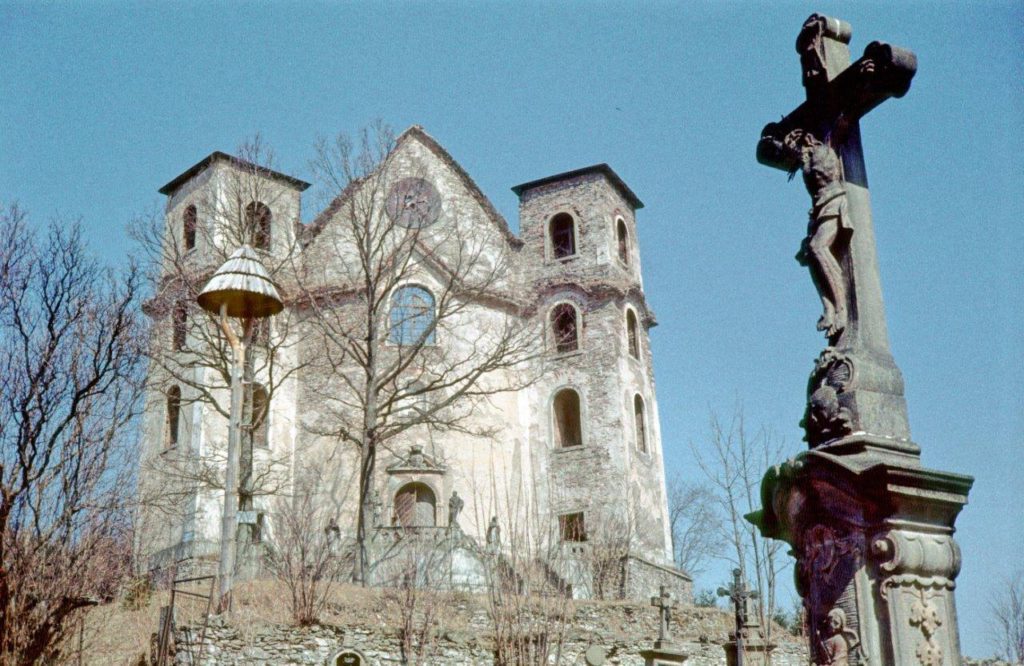
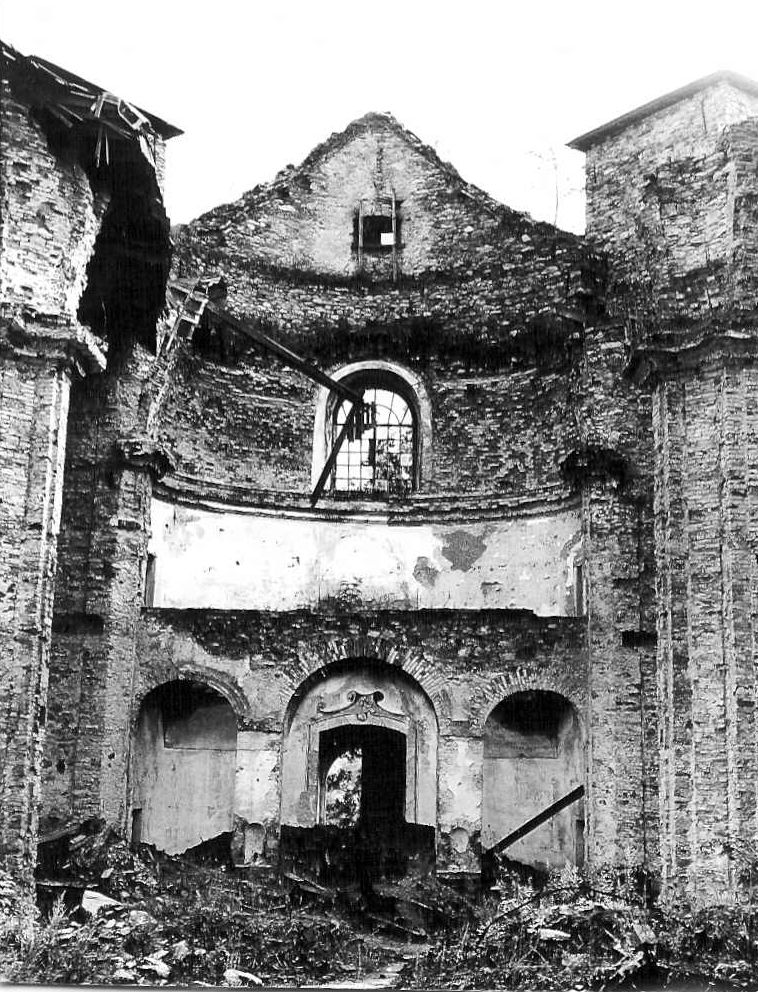
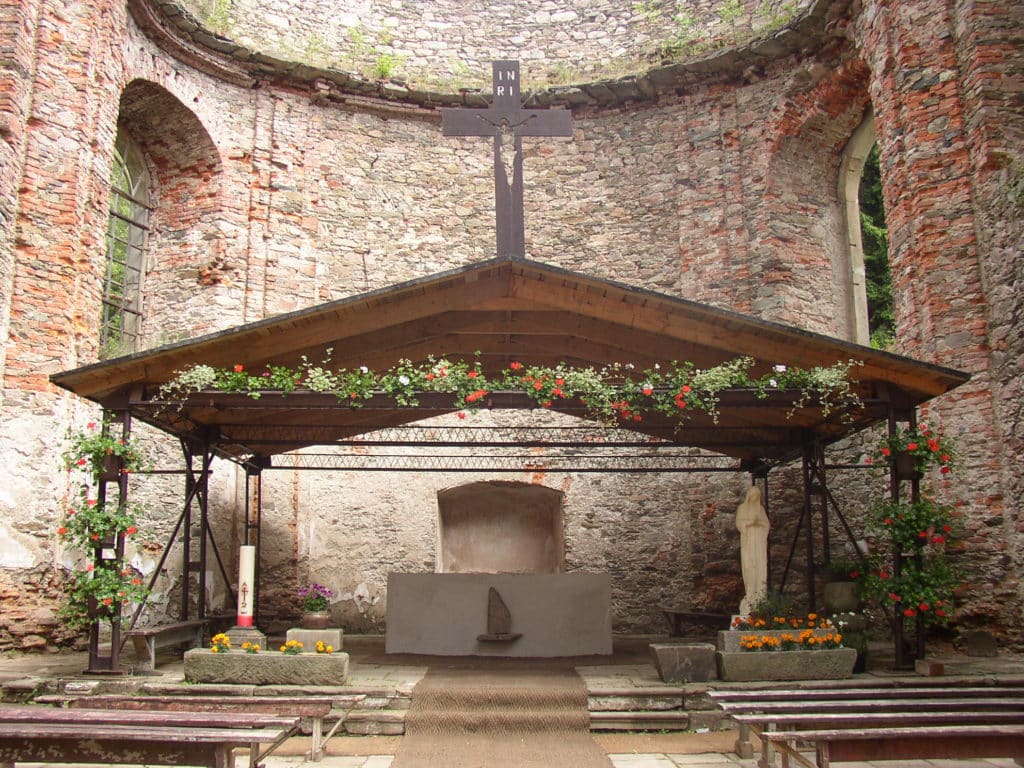
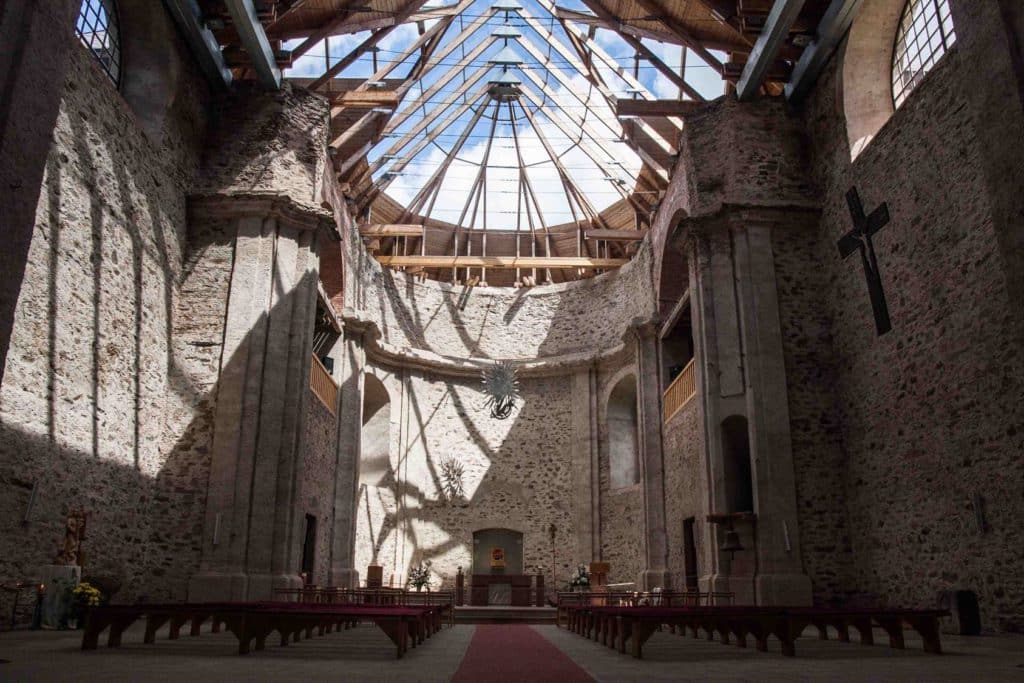
In 1945, the church burned down after being hit by a Red Army shell. Ten years later, local residents attempted to restore at least the church roof, but insufficient funds were raised for the repairs. During the communist era, it was decided to demolish the church, but this plan was abandoned because the money earmarked for the demolition was used to transport a Rococo staircase.
In 1992, the church was successfully listed as a cultural monument. Since then, intensive work has been underway to restore it. Even before that, on August 15, 1990, the first pilgrimage was organized on the Feast of the Assumption of the Virgin Mary, thus reviving the forgotten pilgrimage tradition.
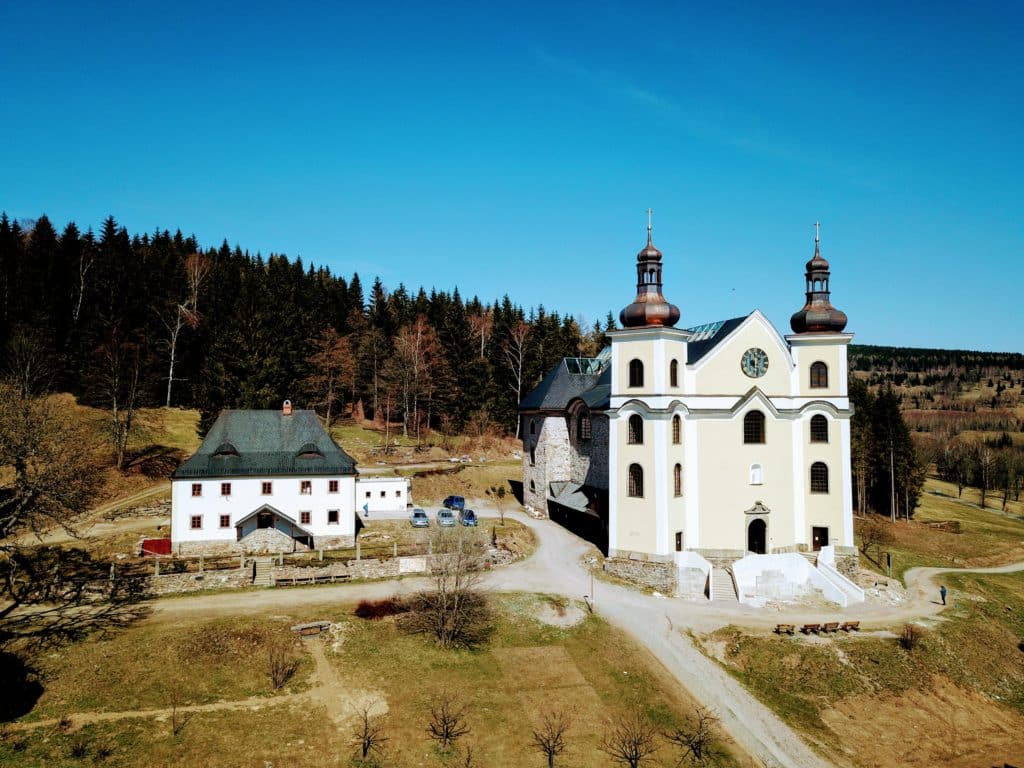
In 2003, the facade, towers, and clock were restored, and a year later, the interior masonry was renovated and the rectory repaired. It got its famous glass roof in 2007, and in 2008, the roof cornices were restored. Then the paving was repaired, the courtyard was renovated, and the entrance staircase was repaired.
Since 2013, the church has been gradually equipped with new liturgical furnishings. In 2018, further reconstruction of the church facade took place, restoring its original Baroque appearance. Efforts to restore the Rococo staircase were thwarted by the courts, and a new staircase had to be built. Baroque domes were returned to the towers, and bells once again rang out from them. Everything was created according to the original design.